TL;DR
- 37 projects studied, with 22 offensive AI frameworks that can be reliably detected from the Internet.
- Over a 30-day period, 9,169 IP addresses exposed at least one of the frameworks studied; 1,430 were identified as honeypots. After excluding them, 7,739 addresses remain.
- The ecosystem is highly concentrated: ARTEX appears on more than 60% of IP addresses, while ARTEX, CyberStrikeAI and PentAGI collectively account for more than 80% of the observed addresses.
- Honeypots significantly skew the figures: nearly half of the results associated with CyberStrikeAI are decoys, whereas ARTEX is rarely impersonated.
- 594 addresses expose at least two frameworks. A single hosting provider, PEG TECH, heavily influences these co-occurrences, accounting for 237 IP addresses exposing both CyberStrikeAI and PentAGI.
- Default configurations play a major role in exposure: several frameworks listen on all network interfaces, some without authentication, while others remain considerably less visible when they enforce local-only binding.
- Some exposed consoles are directly accessible without authentication, particularly those of Cairn and Sapper, with interfaces that may disclose project information or allow actions to be performed on those projects.
- General-purpose agents such as Hermes Agent and OpenClaw are even more widespread, but their exposure alone provides no indication of whether they are being used for legitimate or malicious purposes.
Introduction
AI agents capable of conducting offensive operations are becoming increasingly widespread. Reconnaissance, vulnerability discovery, exploitation, post-exploitation: these frameworks combine language models with security tools to automate a growing portion of these operations.
Their use is no longer limited to authorized penetration testing. In October 2026, Microsoft documented the use of ARTEX by Storm-0940, notably during the compromise of a ConnectWise application. The threat actor leveraged the framework to accelerate its operations, including attempts to access more than 2,250 Microsoft 365 environments. On November 4, India’s CERT-In also reported the use of ARTEX, PentAGI, Cairn and CyberStrikeAI in attacks against the financial sector attributed to CRAFTY FALCON.
While these publications document their operational use, another question remains largely unexplored: what does this ecosystem actually look like when observed from the Internet?
Dozens of frameworks, but not all are visible
Our inventory includes 37 open-source and/or commercial projects, whose capabilities and architectures vary considerably.
Most of the frameworks studied rely on the same principle: a software layer orchestrates one or more language models and provides them with access to security tools. AI agents can thus execute commands, analyze results, adapt their strategy and pursue their objectives with reduced human intervention.
However, not all of these tools leave the same traces on the Internet.
Platforms such as ARTEX, CyberStrikeAI, PentAGI and Cairn provide a web console for supervising agents. Others, such as Viper and DeepAudit, also provide a network-accessible interface.
Conversely, MCP servers and tool APIs, such as MetasploitMCP and MCP-Kali-Server, generally do not expose an identifiable interface. Command-line agents such as PentestGPT and Dark-Moon do not expose any network services by default.
Finally, general-purpose agents such as OpenClaw, Hermes Agent and Agent Zero may also provide a web interface. However, their use extends well beyond offensive security: they are therefore excluded from the main figures and examined separately at the end of this article.
The ability to detect a framework depends primarily on its architecture and configuration, rather than on its offensive capabilities.
| Category | Examples | Visible from the Internet? |
|---|---|---|
| Frameworks with a web console | ARTEX, CyberStrikeAI, PentAGI, Cairn, RedAmon, StrikeAgent | Yes, through their console |
| Platforms repurposed for AI | Viper (Metasploit-based C2), DeepAudit (code auditing) | Yes, through their console |
| MCP servers and tool APIs | HexStrike AI, MetasploitMCP, MCP-Kali-Server, Villager | Almost never: generic response |
| Command-line agents | PentestGPT, Dark-Moon, vibe-pentest, Claude-Red | No: no network listener |
| General-purpose agents | OpenClaw, Hermes Agent, Agent Zero | Yes, but these are expected to be legitimate deployments |
| Commercial platforms | XBOW, Horizon3.ai, Artex Pro, RedAgents | No: hosted by the vendor |
Methodology: one fingerprint per tool
The data covers the period from October 18, 2026, to November 17, 2026.
Addresses tagged as honeypots by ONYPHE (
tag:honeypot) are considered honeypots.
Each fingerprint is derived from the tool’s source code and manual observations of pages visible on the Internet.
For each of the 37 frameworks analyzed, the source code, deployment files and interface resources were examined to identify characteristics observable from the Internet.
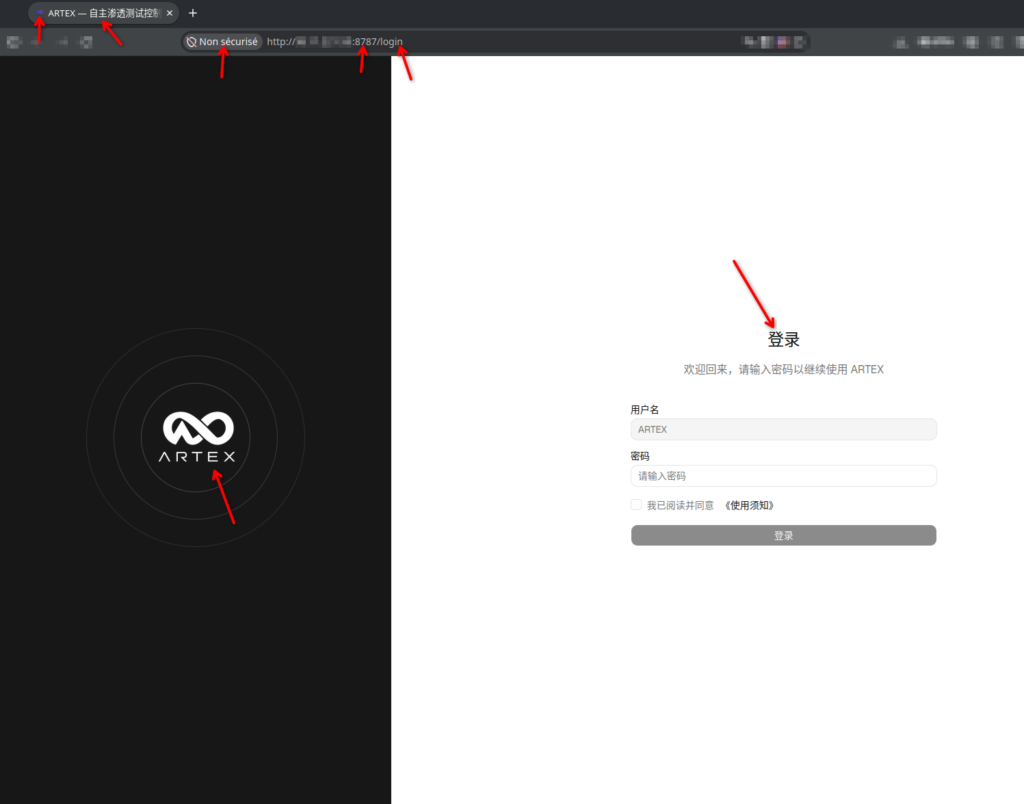
Figure 1: ARTEX login page. The arrows highlight several distinctive elements that can be used to identify this framework.
Five categories of fingerprints were prioritized:
- Favicons, whose hashes often remain unchanged after a project is renamed.
- TLS certificates, particularly when they are generated or provided by the application itself.
- HTTP authentication realms, which identify authentication prompts.
- HTML markers, such as stylesheet names, theme keys or application-specific components.
- Page titles, used when more specific signatures are unavailable.
These elements were then searched for in ONYPHE’s data and cross-checked to limit false positives.
Below are some examples of partial OQL queries:
- ARTEX, based on its favicon:
category:ctiscan favicon.data.md5:cd3ebd16437d6d3963592f7365dd3980 - CyberStrikeAI, based on its certificate:
category:ctiscan cert.subject.cn:"CyberStrikeAI" - CyberStrikeAI, based on a theme key retained in its forks:
category:ctiscan app.data.text:"cyberstrike-theme" - ARTEX, based on its authentication realm:
category:ctiscan http.header.realm:"ARTEX"
The signatures deliberately rely on simple, reproducible fields, without regular expressions.
An IP address is not a service
A service is an IP address and port pair. Counting IP addresses or services provides a different picture of exposure. The discrepancy between the two counts is largely, but not exclusively, attributable to honeypots.
Over the past 30 days, 9,169 unique IP addresses exposed at least one of the frameworks studied. Among them, 1,430 were tagged as honeypots, approximately one in six (16%). When counted as IP:port pairs, the same dataset yields 19,471 services, including 9,908 hosted on honeypots, approximately one in two (51%).
This can be explained by honeypot behavior. A genuine deployment responds on one port, sometimes two: the remaining 7,739 addresses account for only 9,563 pairs, or 1.2 ports per IP address. A honeypot, by contrast, opens a hundred ports or more and displays the console on a subset of them: nearly seven pairs per address on average. Ultimately, the 1,430 honeypot addresses account for more services than the remaining 7,739 addresses combined.
These figures highlight that the choice of measurement unit matters: counting services triples the relative weight of honeypots. This is why the figures presented in this article are primarily expressed in IP addresses, after excluding honeypots.
What 30 days of observation reveal
An ecosystem dominated by three frameworks
The 22 identified offensive frameworks account for a total of 9,169 unique IP addresses, of which 1,430 are tagged as honeypots. The identified honeypots are predominantly associated with CyberStrikeAI (approximately 50% of its results are honeypots), with a small number associated with ARTEX (less than 1% of its results are honeypots).
The concentration is particularly pronounced. Once honeypots are excluded, ARTEX is present on more than 60% of IP addresses. Together with CyberStrikeAI and PentAGI, at least one of these three frameworks is identified on more than 80% of IP addresses.
The chart below shows the number of IP addresses associated with the observed offensive AI frameworks, as well as the proportion of addresses identified as honeypots for each framework. The ten most prevalent frameworks are represented individually, while the remaining twelve — Sapper, HexStrike AI, Xalgorix, AIDA, BugTraceAI, Decepticon, LuaN1ao, BreachWeave, cyber-harness, REDCELL, T3MP3ST and Zen AI — appear in the low-volume section, each being observed on fewer than ten IP addresses.
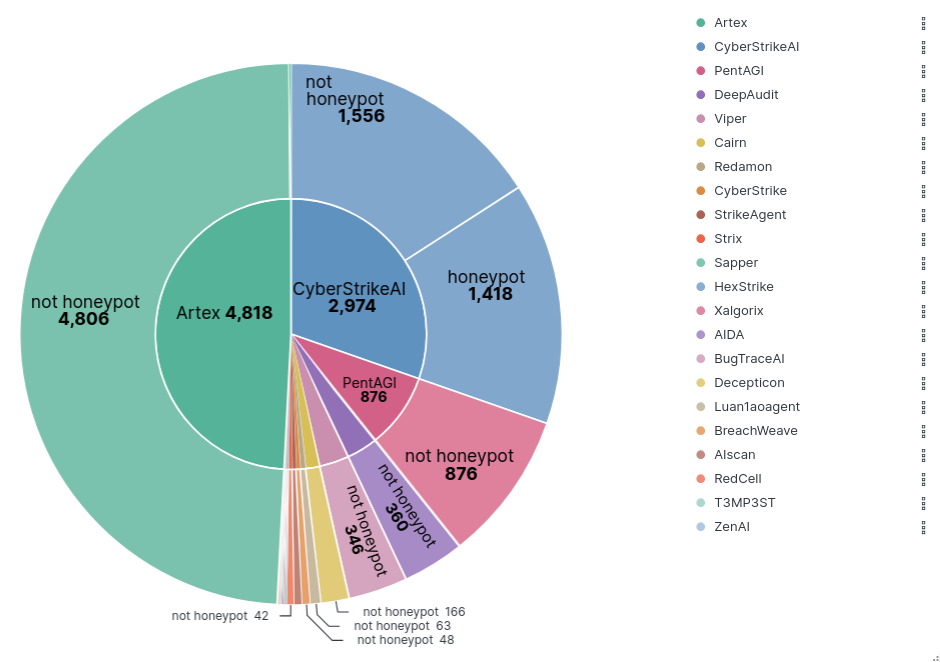
Figure 2: Number of unique IP addresses per framework over the 30 days preceding the publication of this article, with and without honeypots.
This concentration also reflects the strong presence of Chinese-origin projects: the ten frameworks originating from this ecosystem are present on 88% of the observed addresses.
Diverse network configurations
The following figure shows the number of unique IP addresses with an open port, after excluding honeypots. The observed peaks primarily correspond to the default ports used by the most widespread frameworks, notably 8787 for ARTEX, 8080 for CyberStrikeAI and 8443 for PentAGI. This concentration shows that many deployments retain the ports specified in their initial configurations, facilitating their identification at scale.
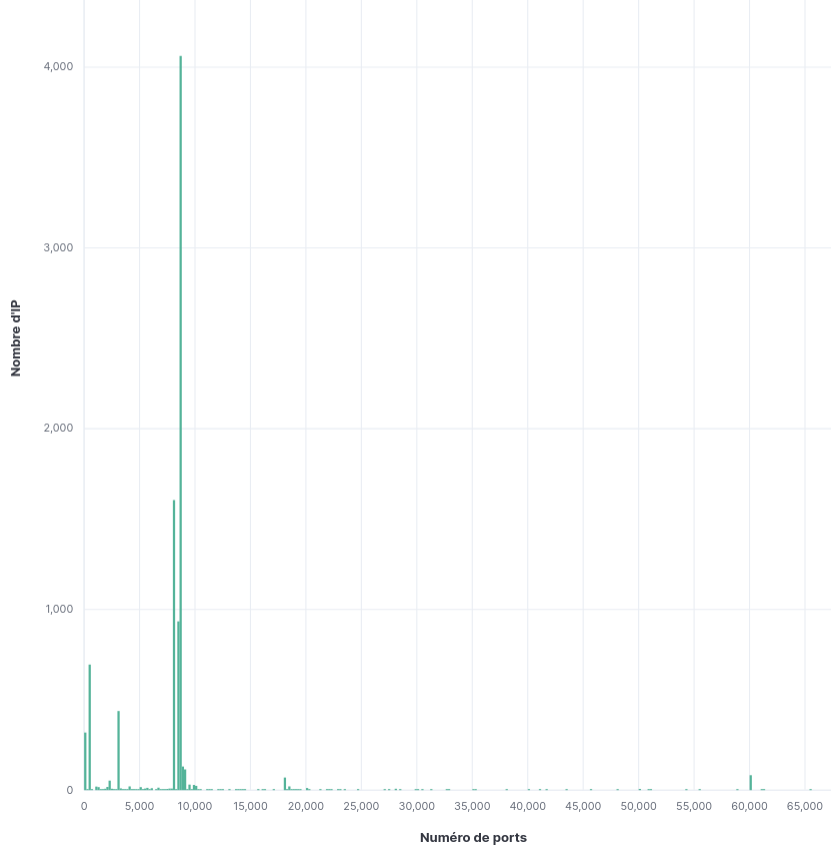
Figure 3: Port distribution by unique IP addresses, excluding honeypots.
TLS usage varies significantly across frameworks: while nearly universal for PentAGI, StrikeAgent and Viper, it remains uncommon for ARTEX, CyberStrike, DeepAudit, Strix and Sapper. These disparities notably reflect differences in the tools’ default configurations and may expose some communications to interception.
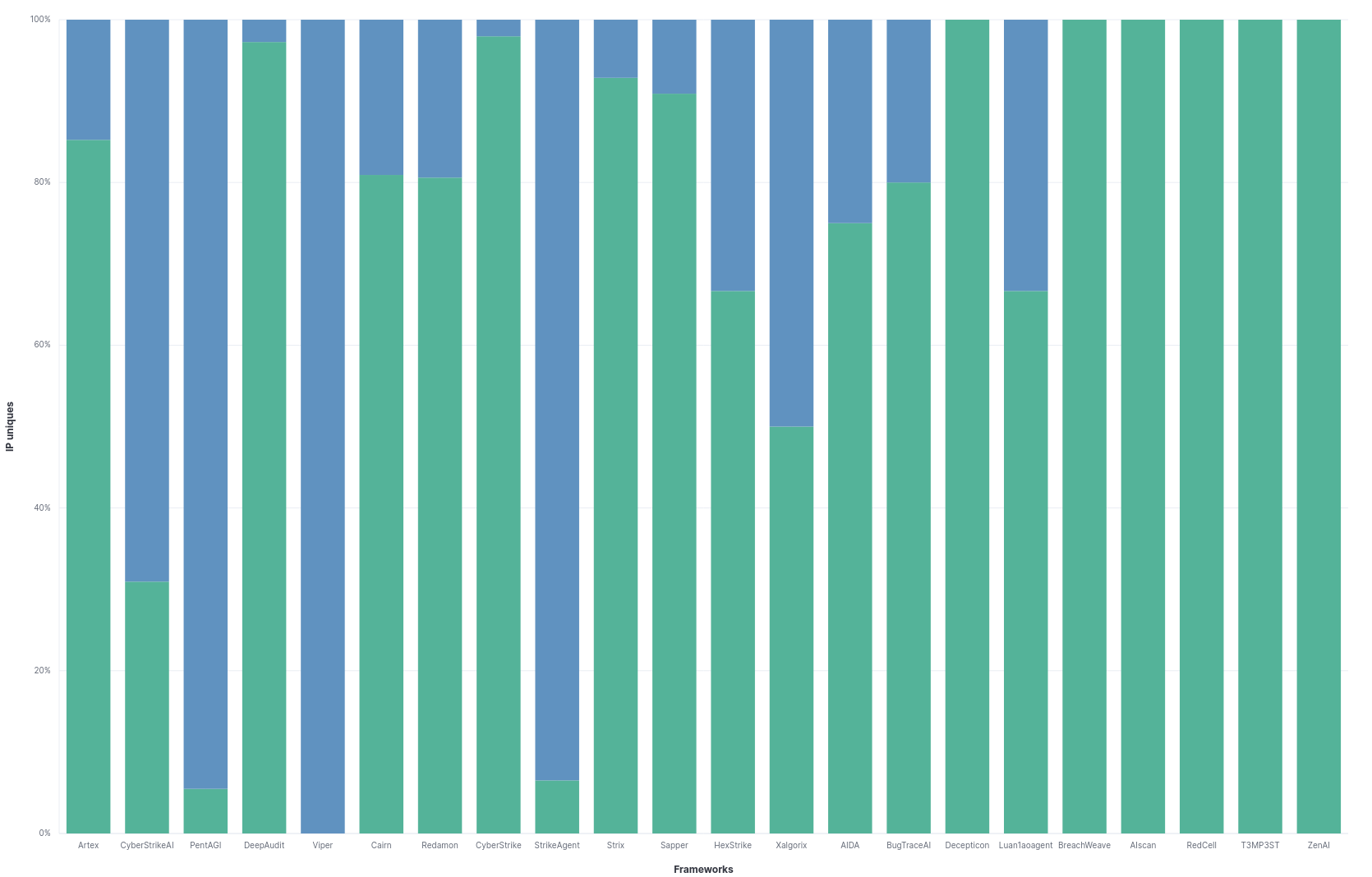
Figure 4: Percentage of IP addresses for which TLS was observed during data collection (blue) or not observed (green), by framework.
Where are these tools hosted?
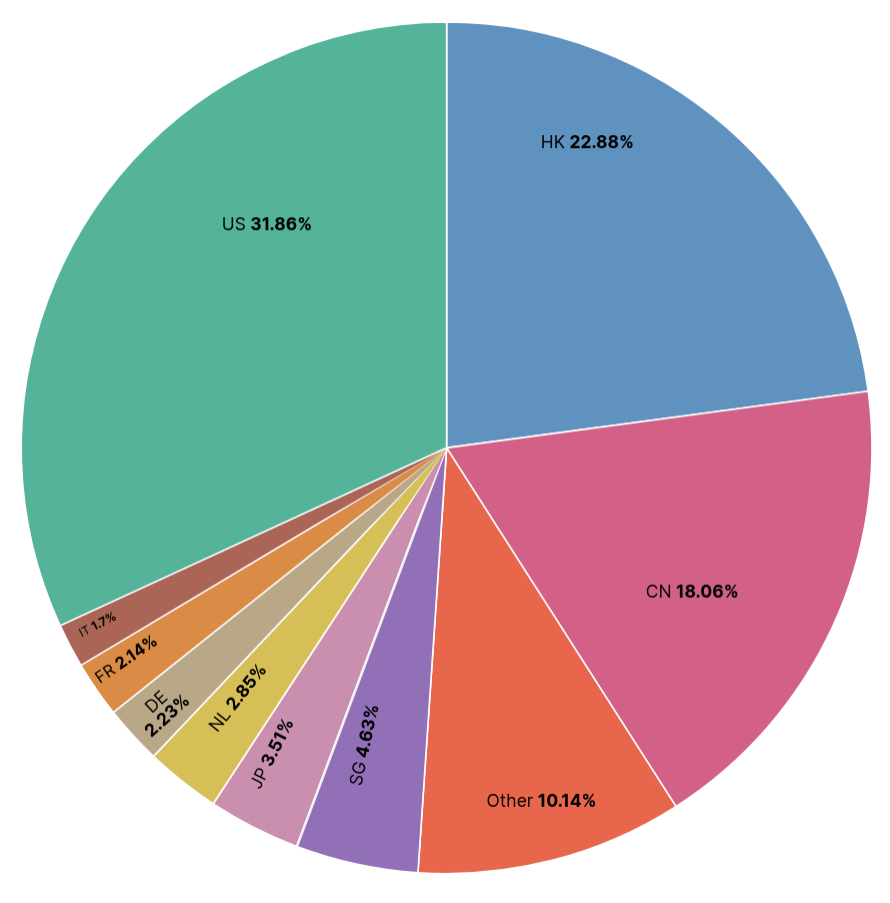
Figure 5: Geographical distribution of IP addresses observed over the past 30 days, excluding honeypots.
The United States ranks first with 2,489 IP addresses. It is followed by Hong Kong (1,787) and China (1,411), which together account for 41% of IP addresses in this region, followed by Singapore (362) and Japan (274).
This information can easily be visualized using VeryScaryMap, an ONYPHE tool that generates a global exposure map from a simple OQL query, along with several Top 10 rankings by country, port, hosting provider or CPE.
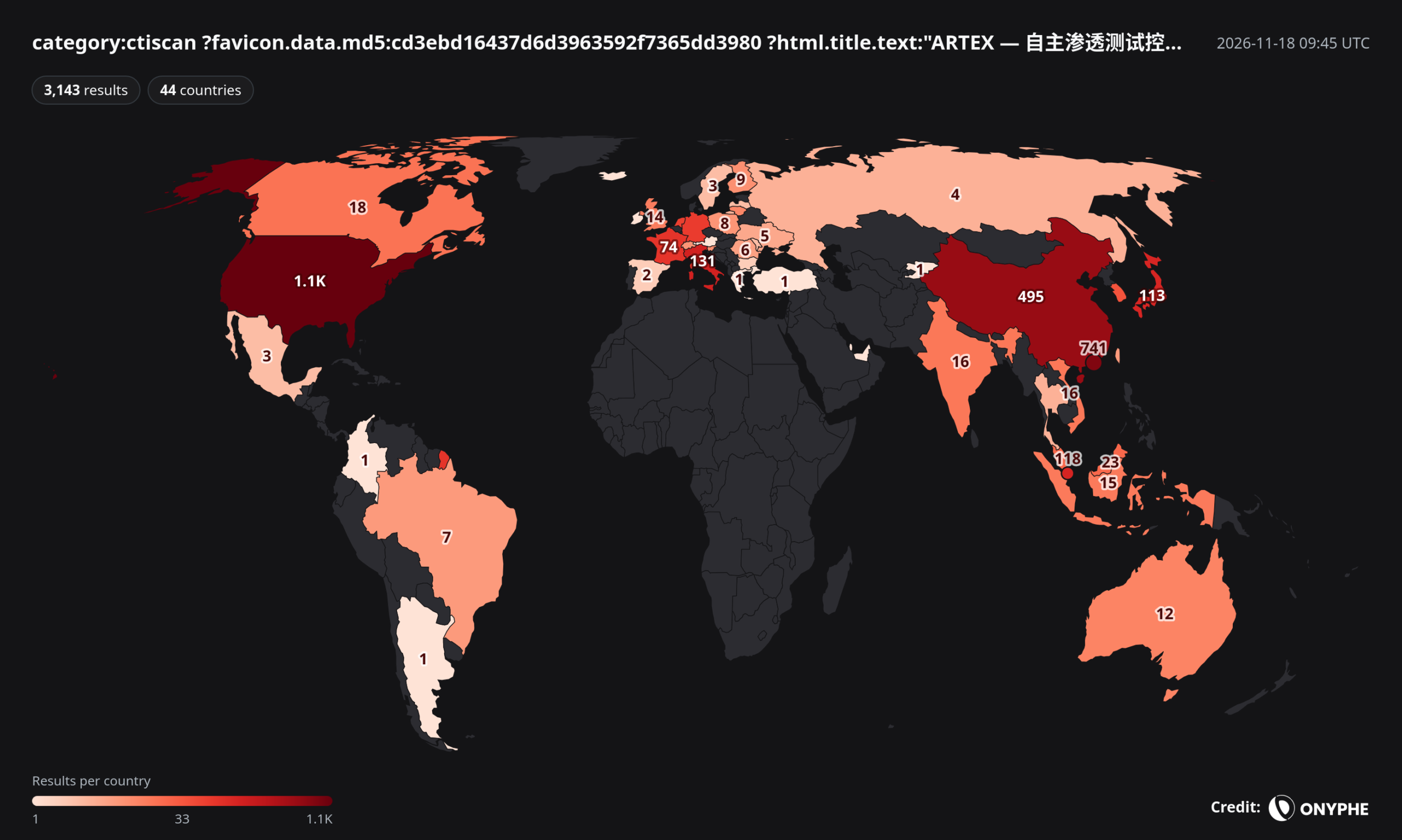
Figure 6: Example of a world map generated using VeryScaryMap for the ARTEX framework (7 days of data).
Among hosting providers, PEG TECH ranks first with 850 addresses, ahead of Tencent (761) and Alibaba (523). Almost all PEG TECH addresses are geolocated in the United States: without this provider, Hong Kong would rank first.
This geographical distribution reflects the location of the infrastructure, not that of its operators. A server hosted in Hong Kong or the United States can be managed from any country. It therefore cannot be used to attribute deployments to criminal groups or state-sponsored actors.
TL;DR: Summary table of the ten most frequently observed frameworks
| Framework | Project origin | Top three IP locations | Total unique IP addresses (excluding honeypots / honeypots only) | Primary port | TLS usage |
|---|---|---|---|---|---|
| ARTEX | China | US, HK, CN | 4,818 (4,806 / 12) | 8787 | 15% |
| CyberStrikeAI | China | US, CN, HK | 2,974 (1,556 / 1,418) | 8080 | 69% |
| PentAGI | Dubai | US, CN, HK | 876 (876 / 0) | 8443 | 95% |
| DeepAudit | China | US, CN, HK | 360 (360 / 0) | 3000 | 3% |
| Viper | China | HK, CN, US | 346 (346 / 0) | 60000 | 100% |
| Cairn | China | HK, CN, US | 330 (330 / 0) | 8000 | 19% |
| RedAmon | Italy | US, FR, IN | 166 (166 / 0) | 3000 | 19% |
| CyberStrike | Not established | US, HK, KR | 63 (63 / 0) | 3001 | 2% |
| StrikeAgent | China | CN, HK, SG | 48 (48 / 0) | 2334 | 93% |
| Strix | United States | US, SG, FI | 42 (42 / 0) | Variable | 7% |
Summary table of the ten most frequently observed frameworks. Origin refers to the project, not the location of its users.
Genuine consoles, honeypots and shared infrastructure
An interface resembling an offensive framework does not always correspond to a genuine deployment. Honeypots no longer merely impersonate vulnerable services: some now replicate the consoles of offensive tools themselves.
Comparing the two most exposed frameworks is sufficient to illustrate this phenomenon. ARTEX is present on three times as many genuine addresses as CyberStrikeAI (4,806 versus 1,556), yet it is rarely impersonated: only 12 honeypots, accounting for less than 1% of its results. CyberStrikeAI, on the other hand, accounts for 1,418 honeypots, nearly half of its results. The number of deployments therefore provides no indication of the proportion of decoys: some tools are targeted by honeypot developers, while others are ignored. General-purpose agents, despite being far more widespread, are also rarely impersonated (see below).
Impersonation techniques also vary. Some honeypots only replicate the page title, while others reproduce the entire login interface. However, they are less likely to replicate the original framework’s favicon or TLS certificate.
CyberStrikeAI is a particularly illustrative example: a search based solely on the page title would nearly double the number of results attributed to the framework.
The proliferation of these honeypots therefore complicates both exposure measurement and research into offensive infrastructure.
Multiple frameworks on the same address
Frameworks are not always deployed in isolation. Over the 30 days preceding the publication of this article, 594 addresses, approximately 8%, exposed at least two frameworks, while around thirty exposed three or more. The most frequent combinations involve the three dominant tools: CyberStrikeAI and PentAGI (282 addresses), ARTEX and CyberStrikeAI (207), and ARTEX and PentAGI (51).
One hosting provider is particularly prominent in these figures. PEG TECH alone accounts for 850 addresses, including 237 exposing both CyberStrikeAI and PentAGI. Without PEG TECH, the proportion of addresses exposing multiple frameworks drops to 5%.
Some addresses expose even more tools. Two addresses belonging to a Hong Kong-based hosting provider expose four frameworks (ARTEX, BreachWeave, Cairn and CyberStrikeAI), alongside a gateway for reselling access to language models.
Reconnaissance tooling follows a similar pattern. Scope Sentry, a Chinese asset mapping platform published by the same GitHub account as ARTEX, is visible on 437 addresses. More than one in four also hosts an ARTEX console.
The services co-located on these addresses appear to be more economic than criminal in nature. Of these addresses, 514 (6.5%) also expose a language model access or resale gateway, such as New API or CLIProxyAPI. Nearly half are hosted by PEG TECH; without this provider, the proportion drops to 3.8%.
Conversely, only 69 addresses (0.9%) host a command-and-control server detected by ONYPHE.
None of these observations alone demonstrates malicious activity. Co-location may reflect an operator experimenting with multiple tools on the same machine, or a server rented successively to different customers. Overall, the findings suggest a shared technical and economic ecosystem rather than a systematic association with criminal operations.
Consoles with insufficient protection
Interface configuration plays a determining role in exposure. Some frameworks listen on all network interfaces by default. Others enforce local-only binding or authentication, but may become accessible as a result of their operators’ deployment choices.
| Framework | Default network binding | Initial authentication |
|---|---|---|
| ARTEX | All interfaces | Password set by the first visitor |
| CyberStrikeAI | All interfaces | Administrator account, random password displayed on first startup |
| PentAGI | Local only | Initial credentials, mandatory change |
| DeepAudit | All interfaces, including the database | Demo administrator account, disclosed by the API |
| Cairn | Local binding in the code, all interfaces in the recommended Docker deployment | None |
| Viper | All interfaces | Root account; HTTP authentication added by the installation script |
| RedAmon | All interfaces, including the reverse shell port | Login page |
| CyberStrike | Agent: local only; Bolt server: all interfaces | Mandatory password (agent), administrator token (Bolt) |
| StrikeAgent | All interfaces | Initial credentials, mandatory change; console hidden behind a random path |
| Strix | Local only, random port | Token (since version 1.6) |
| Nebula | Local only; external exposure denied unless explicitly enabled | Mandatory token |
| Sapper | Local only; exposing it requires changing the bind address | None: the graph access token is embedded in the served page |
The results largely reflect these choices. Among the ten most visible frameworks, only PentAGI and Strix bind locally by default. All others are exposed to the network upon installation or when deployed using their authors’ recommended configurations. Conversely, tools that enforce local-only binding are considerably less visible: Strix accounts for only 42 addresses, and no Nebula instances were detected.
However, a security-conscious configuration does not guarantee the absence of exposure. PentAGI only binds locally upon installation, yet appears on 876 unique IP addresses, ranking third. Its operators have modified the bind address or placed a proxy in front of the console.
Listening on all interfaces does not necessarily mean that a console is openly accessible. CyberStrikeAI generates a random password, and StrikeAgent requires its initial credentials to be changed. By contrast, a newly deployed ARTEX console belongs to whoever accesses it first, and neither Cairn nor Sapper implements authentication.
Interfaces potentially accessible without authentication
Several indexed pages demonstrate the absence of authentication mechanisms, sometimes on tools capable of executing commands.
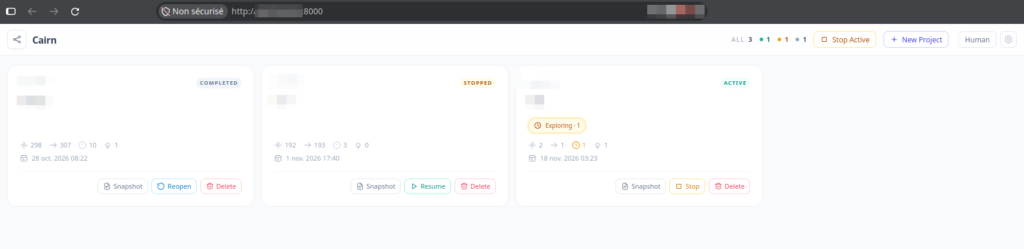
This is notably the case for Cairn, whose code does not implement any authentication. The screenshot below shows the dashboard of an exposed instance: the list of projects, their status (completed, stopped, running), and the buttons used to restart, stop or delete them are accessible without credentials.
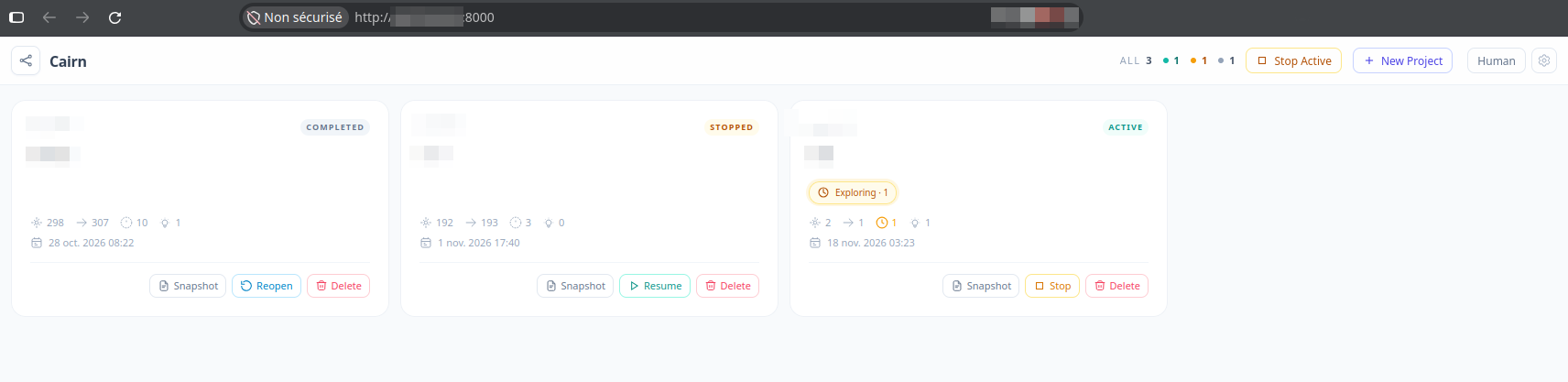
Figure 7: Dashboard of an exposed Cairn instance, accessible without authentication. Address and project names redacted.
Sapper does not implement authentication either. Its viewer displays the graph tracking an ongoing penetration test. It binds locally by default: viewers visible from the Internet have therefore been deliberately exposed by their operators. This framework remains rare, with around ten addresses observed over 30 days, but some indexed viewers are openly accessible to anyone. Other operators place HTTP authentication in front of them.
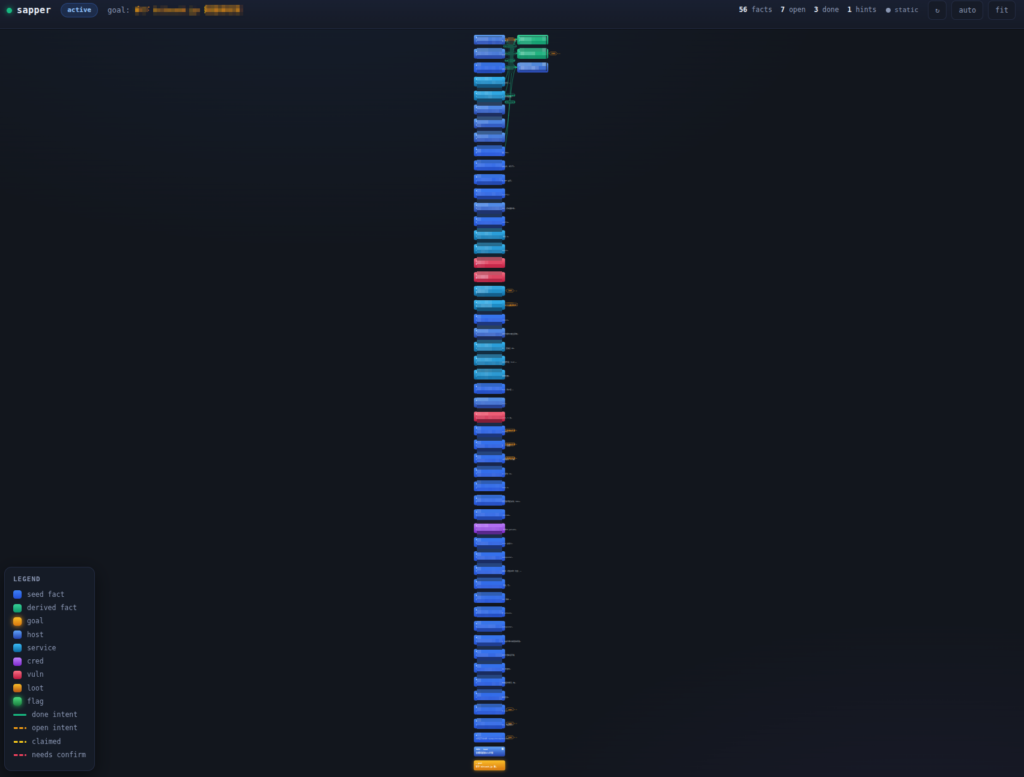
Figure 8: Sapper instance exposed to the Internet without authentication, displaying the attack graph of a well-known cryptocurrency website.
What about general-purpose agents?
General-purpose agents are excluded from the main figures presented in this article: their use extends well beyond offensive security. Three of them were nevertheless studied, as they provide a different perspective on the results.
- Hermes Agent, developed by Nous Research, is a versatile open-source AI agent (approximately 262,000 GitHub stars). It is installed on a server and controlled through a web dashboard or a messaging platform such as Telegram.
- OpenClaw, formerly Clawdbot and subsequently Moltbot, is a widely used open-source personal assistant. It acts on behalf of its user through messaging platforms and is controlled via a web console called “OpenClaw Control”.
- Agent Zero is an open-source agent that executes code and commands on its host machine. It is controlled through a web interface.
Hermes Agent (22,951 addresses) and OpenClaw (14,395) together account for nearly five times as many addresses as the 22 offensive frameworks combined. The OpenClaw count is itself a lower bound: its default port, 18789, is not covered by data collection.
Despite these volumes, only 6% of Hermes Agent results and 9% of OpenClaw results are honeypots, compared with nearly half for CyberStrikeAI. None of the 473 IP addresses associated with Agent Zero were tagged as honeypots.
Although these agents are not designed for offensive operations, their versatility also makes them attractive to attackers. Unit 42 notably observed a threat actor using Hermes Agent and DeepSeek to automate reconnaissance and exploit discovery activities, with orchestration carried out through Telegram. Since this control mechanism relies on a messaging platform rather than the web console, an exposed address provides no indication of how the agent is being used.
Configuration-related risks remain. Agent Zero disables authentication by default. Of the 473 observed addresses, nearly one in five (86) does not display a login page.
However, the observed interfaces exhibit several behaviors depending on their versions and configurations: some display a conventional authentication form, others return an error message related to origin restrictions (ALLOWED_ORIGINS) when login is disabled, while others display the application dashboard directly, making chats and data freely accessible.
These differences show that the absence of authentication does not necessarily mean that the interface is accessible from any origin: additional restrictions may be enforced. Nevertheless, the ability to directly access an agent capable of executing code and system commands represents a significant risk.
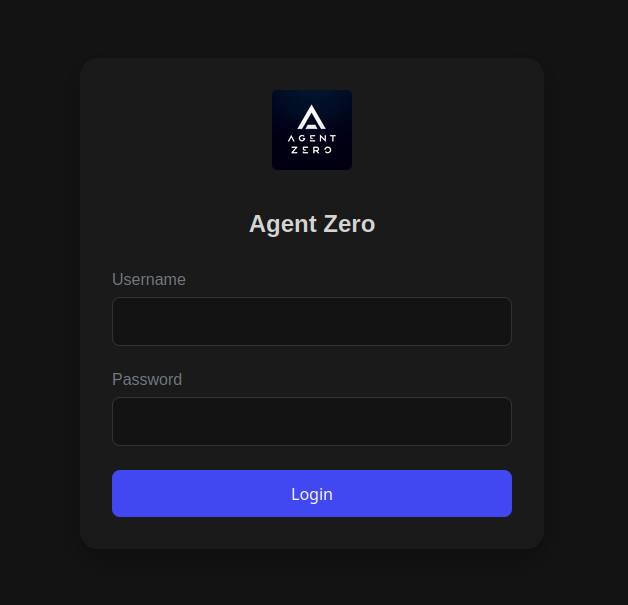
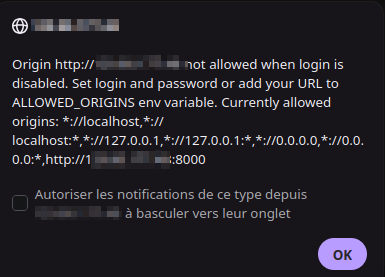
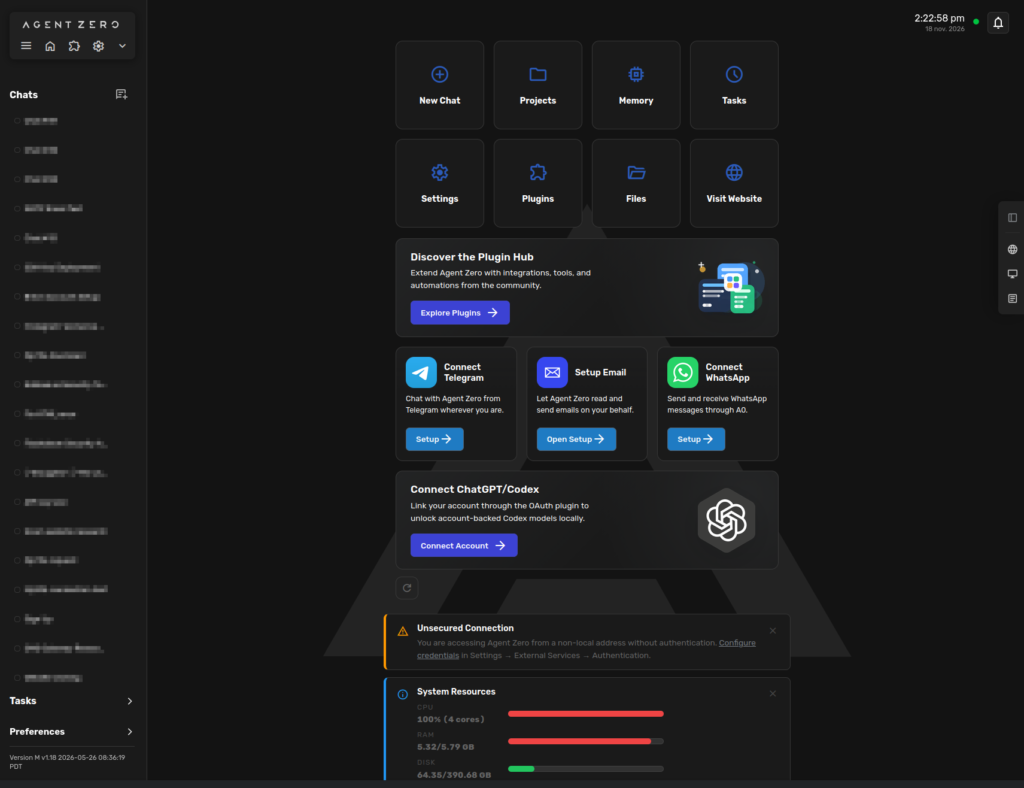
Figure 9: Three behaviors observed on exposed Agent Zero instances: an authentication page (left), an error message related to origin restrictions when authentication is disabled (center), and a directly accessible dashboard without a login form (right).
Limitations of the study
Detection depends on ONYPHE’s data collection coverage and the markers present in the observed responses. A deployment accessible from the Internet may remain undetected if its port is not covered. Across the more than 5,000 ports covered by ONYPHE, some applications return a generic response at the root endpoint that unrelated services may also produce.
The results measure observable exposure based on the selected coverage and fingerprints. A low number of observations may therefore reflect detection difficulties and should be interpreted with caution when comparing the prevalence of different tools.
The results thus provide an estimate of observable exposure rather than an exhaustive inventory of deployments.
Conclusion: An exposure surface that remains poorly understood
Over the past 30 days, 7,739 IP addresses exposed at least one of the 22 offensive AI frameworks studied, after excluding honeypots. The landscape is highly concentrated: ARTEX is present on six out of ten addresses, the three dominant tools on 86%, and Chinese-origin projects predominate.
These figures must nevertheless be interpreted with caution.
- Nearly half of the addresses resembling CyberStrikeAI are classified as honeypots by ONYPHE, and counting services rather than addresses would triple their relative weight.
- A single hosting provider such as PEG TECH can inflate the figures by exposing the same tool across hundreds of addresses.
- Conversely, potentially widespread frameworks remain invisible due to a lack of distinctive characteristics. A low number of results therefore does not imply limited adoption.
The study also shows that configuration matters as much as the tool itself. Most of the visible frameworks listen on all network interfaces upon installation. Several serve their consoles without encryption, and some, such as Cairn and Sapper, do not enforce authentication. Their operators consequently expose themselves to risk, as these consoles may provide access to model API keys, target information or command execution capabilities. This observation extends beyond offensive tools: general-purpose agents such as Agent Zero are exposed in the same way.
For security teams, these fingerprints have an immediate application: identifying unexpected deployments within their own perimeter, assessing their exposure and prioritizing remediation. They also provide insight into the tooling used in certain offensive operations.
It remains essential to distinguish between exposure, vulnerability and malicious activity. These tools are also used for authorized penetration testing and research. An identified console is not an indicator of compromise, and no direct link has been established between the addresses in this study and the campaigns mentioned in the introduction.